The honest part nobody talks about
Yes, it feels different. Not worse, not better. Different. And that shift matters more than you'd think.
When you've been using a lemon vibrator alone, your body knows exactly what to expect. You've calibrated the pressure, the rhythm, the angle. You understand your own pleasure map like a familiar route. Then you bring someone new into that equation, and suddenly you're navigating unfamiliar territory together. The vibrator is the same. Your nervous system isn't.
Why a new partner changes the experience
This isn't mystical. Three concrete things happen when you introduce a lemon clitoral vibrator or any vibrator into a new relationship.
First, there's psychological shift. You're watching another person interact with your pleasure. That means vulnerability, which means your nervous system is slightly activated even if you're aroused. Your body splits attention between the physical sensation and the emotional experience of being seen. That's not bad. It's just different from solo exploration.
Second, the dynamics of control shift. When you're alone with your lem vibrator, you're in charge of every variable. Pressure, speed, angle, duration. With a partner, even if they're letting you hold the device, there's an implied negotiation happening. Are they watching because they want to? Are they learning your body, or performing their own fantasy? Those unspoken questions affect arousal more than most people realize.
Third, there's the pleasure paradox. A lemon vibrator works by concentration. It doesn't require manual stimulation from a partner. That means someone else gets to be present in a completely different way than during penetrative sex. They're not performing. They're witnessing. Some people find that intensely erotic. Others find it uncomfortable at first.
When introducing it early is actually smart
There's a counterintuitive advantage to bringing a lemon clitoral vibrator into things relatively early rather than waiting months or years.
If you introduce it in the first few months, it's easier to frame it as part of exploring together rather than "something I've been hiding." You're both still in discovery mode. You're both vulnerable. The device becomes a shared learning tool instead of evidence that something was missing.
I've worked with couples who waited until year three to mention vibrator use. By then, the other partner sometimes heard it as criticism. "If you needed this, why didn't you say something?" or "Does that mean I'm not enough?" Those conversations are solvable, but they're harder.
Introducing it early also lets you both adjust without performance pressure. You can laugh if something awkward happens. You can experiment with whether you want them to hold it, whether you want music on, whether the bedroom temperature matters. It's research, not repair.
The actual mechanics of using one together
Let me be specific because vagueness breeds anxiety.
Scenario one: You're in bed, foreplay is happening, and you want to add the vibrator. Say that. "I want to use my lemon vibrator. Do you want to touch me while I do, or would you rather I guide your hand?" Clarity kills awkwardness.
Scenario two: They're interested in using it on you. Great. Show them the settings first when you're not aroused. Let them feel how the patterns change. Explain what feels good. Most people don't instinctively know how to use a clitoral vibrator. That's not a failure. It's just education.
Scenario three: They seem hesitant or uncomfortable. Don't push. Ask why. Is it insecurity? Is it genuinely not their thing? Those are different conversations. One needs reassurance and information. The other needs respect.
The confidence piece matters more than the device
Here's what I see shift in couples who navigate this well: the person using the vibrator stops apologizing for it. The partner stops seeing it as competition.
That shift usually happens after two things. One: the person with the vibrator has said clearly, "This is part of how my body works. It's not about you. It's about me knowing myself." Two: the partner has decided to believe them.
That belief usually comes from seeing how much pleasure the vibrator facilitates. If it's making someone orgasm more easily, last longer, feel more present. That's not a threat. That's evidence that this person is invested in their own satisfaction, which actually makes them better in bed.

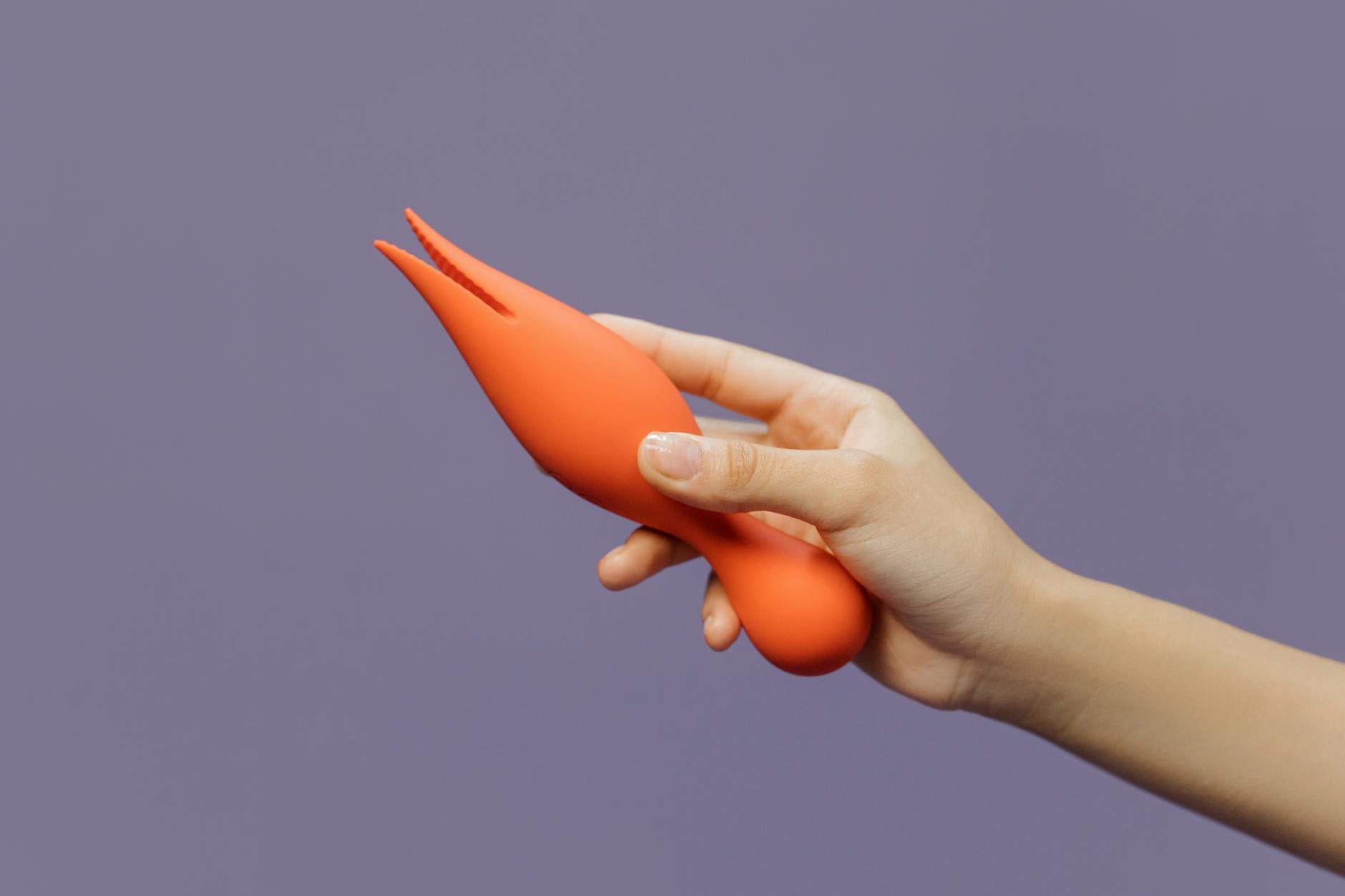
Photo by cottonbro studio on Pexels
What feels different physically
With a new partner in the room, you might notice:
Orgasms can feel more intense because you're being witnessed and held, even if hands aren't directly involved. Some people report that having a partner's presence actually heightens the vibration sensation.
Or you might notice the opposite. Distraction is real. Your brain might pull focus to whether they're bored, or whether this is taking too long, or whether you're doing it "right." That's not a flaw in you or the device. That's just what happens when performance anxiety meets pleasure.
Timing also shifts. Alone, you might edge for 20 minutes. With someone watching, you might want to come faster. That's fine. Your body is allowed to respond differently in different contexts.
The conversation that prevents problems
If there's one thing I'd recommend before introducing a lemon vibrator or any clitoral vibrator into a new relationship, it's this: have the conversation when you're not in bed.
Say something like: "I use a vibrator on my own. I like my pleasure. I'm curious about exploring with you. How do you feel about that?" Listen to the actual answer, not the answer you hoped for. If they seem worried, ask what's underneath it.
Most concerns aren't actually about the device. They're about feeling: unsure if they're enough, unclear what their role is, worried they'll do it wrong. Those are solvable. A conversation does the solving. The vibrator just needs to show up.
You might also use this moment to build in permission for both of you. "If at any point this doesn't feel good, we stop. No explanation needed." That safety usually makes people more adventurous, not less.
When to pause and reconsider
If a partner is persistently uncomfortable, shaming, or dismissive about your vibrator use, that's information. Not all discomfort is a red flag. But contempt is. Shame is. Control is.
I've sat with people who stayed with partners who made them feel broken for needing a vibrator. That's the relationship problem, not the vibrator problem. A lemon clitoral vibrator is a tool for your pleasure. If someone can't support that, they can't support you.
That's not dramatic. That's just true.
What changes over time
Couples who integrate vibrators into their intimate life tend to report three shifts over months.
One: the novelty wears off and it becomes normal. That's good. You stop performing around it.
Two: communication deepens. "Can we try this pattern?" or "That angle felt amazing" becomes normal dirty talk. The device becomes a reason to be more specific about pleasure.
Three: partners often become curious about their own pleasure in new ways. Watching someone use a lemon vibrator sometimes makes a partner want to explore too. Not always. But sometimes.
None of that requires a dramatic moment. It just requires showing up as yourself, bringing your whole life including your pleasure tools, and letting your new partner decide if they want to be part of that.
People also ask
Will my new partner think I'm too sexual if I use a vibrator with them?
Some might. And that tells you something important about compatibility. Partners worth keeping are generally excited about your pleasure, not threatened by it. If someone judges you for knowing what you like, that's about their insecurity, not your sexuality.
Should I use a vibrator the first time I have sex with someone new?
Probably not the literal first time. There's usually enough novelty without adding a device. But within the first few weeks, once you've both relaxed a bit, it's fair game if you want.
What if they want to use it on me and I'm not ready?
Then you say that. "I love that you're interested. I want to use it myself first and get comfortable with you watching." You're allowed to move at your own pace. That boundary actually builds trust faster than compliance would.
Does a lemon vibrator work better with a partner or solo?
Neither is better. They're different. Some people find why lemon vibrators feel better after hormonal changes offers insight into physical response, but emotional context matters just as much. A lemon clitoral vibrator is a tool. The context you use it in determines the experience.
How do I know if my partner is uncomfortable but won't say it?
Watch for withdrawal. Do they leave the room? Do they seem quieter afterward? Do they avoid initiating for a while? Those are signals. Ask directly in a low-pressure moment. "I noticed you seemed a bit quiet after. Everything okay?" Then listen without defending.
Is it weird that I want to keep using my vibrator even after meeting someone?
No. Solo pleasure and partnered pleasure are different. Most people who have vibrators keep using them alone even in relationships. That's not a replacement for partnered sex. It's a different conversation with your own body.
What actually matters
The lemon vibrator itself doesn't change the relationship. Your honesty does. Your willingness to be seen. Your partner's willingness to see you.
Introducing a clitoral vibrator into a new relationship is just a practical way of saying, "I want you to know all of me, including the parts I've been learning on my own." That vulnerability either builds connection or it doesn't. The device is just the vehicle.
If your new partner can sit with that, can be curious instead of defensive, can celebrate your pleasure instead of competing with it. That's someone worth keeping around. The vibrator was just the revealing part.
Ready to explore further
If you're looking to deepen communication with a new partner about pleasure, or you want to learn how to use a vibrator during partnered sex, Hello Nancy has resources that can help. You might also find it useful to choose the right vibrator for your body before introducing it into a relationship. And if you're navigating sensitivity concerns, our guide on why lemon clitoral vibrators work better for sensitive skin covers that too.
For questions about how to introduce pleasure tools into your specific relationship dynamic, reach out to Hello Nancy. We're here to help you feel confident in every aspect of your intimate life.